Beyond Titles: Exploring the Dynamics of Skill-Based Organizations in Tech
Beyond Titles: Exploring the Dynamics of Skill-Based Organizations in Tech
Beyond Titles: Exploring the Dynamics of Skill-Based Organizations in Tech
Co-Authors: Gokhan Akca: Engineering Manager at Udemy (connect & read) Nailcan Kucuk: Software Engineer at Udemy (connect & read)
Organizations are on the brink of another transformation, and this time it will change the way they work, hire, shape their departments, and utilize their workforce. Demands for agility, agency, and equity are introducing a new opportunity to apply skill-based models and become skill-based organizations.
I anticipate concerns related to whether this is truly a passing trend or if it will last. However, we believe that although it requires a fundamental paradigm shift and introduces short-term challenges, organizations will transform themselves into skill-based organizations once they begin to enjoy greater agility, fewer setbacks, and better productivity.
Below, we will engage in a series of questions and provide answers from our own unique perspectives. As we explore the world of skill-based organizations, we’ll share insights, experiences, and strategies based on our personal viewpoints within the software industry. Through the lens of both management and individual contributors, we’ll navigate the evolving landscape of skill-based organizations, uncovering the intricacies of this innovative approach and its significant implications for managers and ICs alike in the dynamic field of software development.”
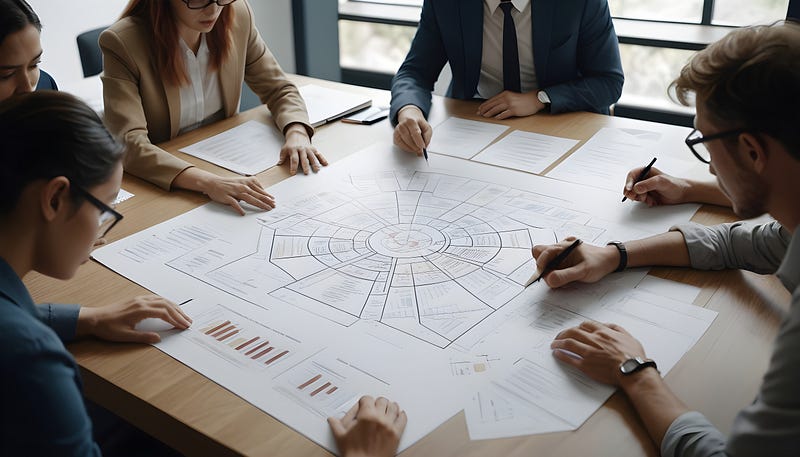
Question: Could you explain what a skills-based organization is, and why it’s becoming increasingly important in today’s business landscape?
Gokhan: From my point of view, a skills-based organization is a flexible and adaptive business that values the diverse skills of its employees, recognizing their potential to drive success. Unlike traditional structures, it focuses on integrating skills into every aspect, from strategy to people management. By empowering individuals beyond their job titles, they’re free to contribute based on their unique expertise and interests.
A skills-based organization represents a significant shift in talent management strategies for managers like me. It emphasizes the importance of a diverse set of skills over traditional job titles or roles. This not only boosts employee engagement and motivation but also enhances the company’s agility in responding to industry changes. By empowering employees and focusing on skill development, such organizations are better prepared to capitalize on opportunities for growth.
This approach places a high value on the experiences and expertise that each individual brings to the table. It recognizes the wide range of skills and capabilities within the workforce, fostering a more inclusive and equitable environment. Unlike traditional structures that tie promotions to hierarchy, a skills-based organization prioritizes individual skill growth and career mobility, challenging established cultural and structural norms.
At its core, a skills-based organization is characterized by flexibility and adaptability, crucial qualities in the fast-paced world of engineering. It promotes a culture where employees are encouraged to continuously learn and innovate, driving the company’s success.
By embracing these principles, I can help my teams succeed in the ever-changing industry environment.
Question: How does this approach influence the day-to-day work of engineers specifically?
Nailcan: When I think about the basic characteristics of skill-based organizations, I think of dynamism, agility, the ability to quickly adapt to change, giving importance to learning processes and evaluating employees based on their skills. In this approach, the ability to acquire new skills quickly and accurately when necessary is very important. Employees must be eager and motivated to learn. It is also very valuable to be proactive in this approach and to be inspiring to those around you.
Proving our skills with internationally valid certificates and badges is valuable in terms of allowing a more realistic and standardized evaluation of our skills as employees.
I believe continuous learning and development is the cornerstone of an employee’s journey. Setting both short- and long-term goals can help maintain motivation. Engaging in activities that foster collective development, such as attending tech talks and writing articles, not only helps achieve career goals but also supports a culture of continuous learning within the organization.
Another notable advantage of the skills-based approach lies in its capacity to enable employees to work on different projects in various fields and technologies over time, thanks to the organizational flexibility it provides. This will likely reduce employee turnover rates caused by factors such as recession, career advancement, or boredom. It also increases career development opportunities not only within one’s own industry but throughout the entire organization.
Question: From a managerial standpoint, why is upskilling critical for staying competitive in the software industry?
Gokhan: The software industry is changing faster than others, with technology evolving rapidly. Staying current with the latest tools, languages, and methodologies is crucial for people’s success in IT. Upskilling enables software professionals to adapt to changing market demands, innovate effectively, and deliver high-quality solutions that meet client needs. By continuously improving their skills, individuals and teams can stay ahead of the curve, remain relevant in the industry, achieve sustainable growth and success, and eventually maintain a competitive advantage.
From an organizational perspective, upskilling is indispensable. Without it, maintaining productivity, enhancing employee engagement, and fostering innovation become challenging. Failure to invest in upskilling can lead to decreased retention rates, difficulty in attracting top talent, and ultimately, the failure of products to meet customer expectations.
Therefore, upskilling should not be viewed as a trade-off but rather as a fundamental requirement for ensuring the ongoing success of the company in the market. It is an investment that yields invaluable returns, driving organizational growth and resilience in the face of evolving industry dynamics.
Question: How does upskilling impact an engineer’s career trajectory and overall job satisfaction?
Nailcan: Following current technological developments and trends and constantly gaining new skills not only improves our business proficiency but also increases our individual brand value and marketability. In this way, it is inevitable for us to reach a preferred position and for new career opportunities to arise.
This process of continuous development and learning broadens our perspective and enables us to approach problems from different perspectives. This allows us to see the larger photo better and make more accurate decisions.
It is also important to be satisfied with the work you do professionally. This is a feeling that increases as you develop your areas of expertise, as you are able to help and inspire more of those around you, and as your successes are rewarded. Continuous improvement also improves your internal motivation and your level of enjoyment of what you do.
Additionally, as we improve our skill set, we start to earn higher profits. Of course, this is an important motivation in professional life.

Question: What are the advantages of adopting a skills-based approach for organizational management?
Gokhan: Organizations are currently dealing with a significant skills crisis, as shown by surveys indicating that the required skill set for jobs has changed by 25% since 2015. To put it simply, employees who have been in the same role for the past nine years are doing their jobs while lacking a quarter of the necessary competencies. And the situation is expected to get worse, with this rate expected to double by 2027.
To bridge this skills gap, companies can adopt a skill-based approach and make two major changes.
Firstly, traditional organizational structures like hierarchical, flat, and matrix have been the norm for the past decades. Moving to a skills-based organization offers a chance to change these structures and create more efficient organizational frameworks. It’s clear that this shift requires a change in mindset, behaviors, and cultural norms, but it’s essential that action is taken to address the potential risks associated with skill shortages.
Secondly, a skill-based approach can revolutionize the hiring process. Instead of recruiting for specific roles, companies can focus on hiring individuals based on the skills they lack. Instead of planning to hire for predetermined roles and teams, organizations can recruit talent to fill skill gaps. This approach not only promotes flexibility within the organization but also attracts external talent by offering limitless opportunities.
On LinkedIn, countless job posts seek candidates for specific roles within designated departments, such as “Looking for a Python Developer for Payment Refunds team.” Now, consider being offered a position not bound by departmental constraints or a specific role, but rather as a valued colleague with Java development skills. Which one sounds more promising?

Question: Are there any challenges or drawbacks engineers might face in such an environment?
Nailcan: In this new approach, the skills of employees and their ability to learn a new skill come to the fore. However, there are of course some difficulties brought by this approach.
Each employee’s skill set will be different. For this reason, it is very critical to understand the skills of employees correctly and to assign them to the right projects within the framework of these skills. Otherwise, some employees may be overloaded while others may not be used efficiently enough.
Of course, it is a very difficult process to ensure the accuracy and validity of the skills reported by the employee. Here it will be necessary to turn to objective and standardized measurement methods.
Keeping employees’ skills up to date and in line with company goals and needs can also be a challenge. It is necessary to keep employees in a continuous learning process by directing them to the right resources.
Another change will be at the point of performance evaluation. Traditional performance measurement methods may not accurately measure employee contributions in a skill-based model. New and accurate metrics that will affect the performance evaluation process will need to be identified and implemented.
The adoption of this new approach by the company will also cause cultural change at many points throughout the company. Changes can be painful at first. Therefore, it is important to maintain the motivation to collectively commit to and adapt to this transformation. Changing conditions should be transparently communicated to employees.

Question: How does a skills-based approach foster collaboration and communication among teams?
Gokhan: A skill-based organizational structure fosters flatter hierarchies centered around individual skills rather than titles. With this innovative approach, you’re never limited to a department or siloed with specific technologies. Upskilling and learning new technologies become integral parts of your daily tasks, offering endless opportunities for growth within the company you work for.
In this dynamic environment, you have the freedom to move between projects and teams frequently. This allows you to showcase your competencies, ultimately making a bigger impact and expanding your influence within the organization. Moreover, this flexibility enables you to establish new connections and alliances, broadening your professional network.
Every challenge becomes an opportunity to learn and demonstrate your skills while collaborating with others who value your expertise. The diverse range of work and interactions with colleagues fosters a positive communication environment and strengthens the bond among people, mission, and organization.
Question: How do you effectively communicate your skillset and collaborate within this framework?
Nailcan: In skills-based organizations, while individual development is crucial, fostering company-wide growth is equally vital. To achieve this, cultivating an environment that nurtures learning and development across the organization is essential.
Facilitating information sharing among employees and promoting a culture of knowledge exchange are key elements in creating such an environment. Organizing skills-sharing sessions accessible to all employees, utilizing common documentation tools, and establishing communication channels within the company messaging application can facilitate the dissemination of important developments and insights.
Moreover, the flexible team structure supported by this approach accelerates the sharing and acquisition of diverse knowledge within teams composed of individuals with varied skills. This collaborative dynamic enhances collective learning and team effectiveness.
Professional development opportunities provided by organizations play a significant role in fostering employee growth. Offering access to relevant learning tools and facilitating shared learning experiences in specific areas can further enhance skill development. Subsequent idea-exchange sessions and collaborative projects following these learning initiatives reinforce the learning process.
A robust feedback mechanism is essential throughout these processes. Establishing a culture of constructive feedback, where both positive reinforcement and respectful critique are encouraged, can boost employee motivation and facilitate self-improvement by helping individuals identify areas for development.

Question: What trends do you foresee in the evolution of skills-based organizations, and what challenges might accompany these changes?
Gokhan: Transitioning to a skills-based organizational model won’t happen overnight; as mentioned earlier, it requires a significant shift in how companies structure themselves, recruit, and motivate their employees. Legacy mindsets and practices may present significant barriers to this change. For example, many companies struggle to determine the placement and function of a skills hub within their organization, despite its crucial role in the transition to a skills-based approach.
On the people management front, adopting a skills-based organization requires viewing a worker’s journey as “access, grow, connect” rather than the traditional “attract, develop, retain” approach. However, frameworks to support this transition are still in development. Moreover, compensation practices have yet to adapt to skill-based promotions; they require comprehensive reassessment to align with modern standards.
Anticipating numerous setbacks and lessons learned along the way, we must prioritize gaining experience and sharing lessons learned. By collectively accumulating knowledge about skills-based structures and their management, we can navigate challenges more effectively and set the stage for successful implementation.
Question: What steps can engineers take to prepare for the future demands of a skills-based workforce, and what obstacles might they encounter along the way?
Nailcan: With this new approach, it is necessary to establish a structure for companies that focuses on skills and abilities. As employees, it is very important that we constantly improve our skills, follow industry trends closely, and keep up with technological developments. Of course, focusing only on technical competencies will not be enough here. In addition, we should try to diversify our skill set by investing in our social skills such as communication, problem-solving, and adaptation. Although it is not practical to specialize in every field, we should focus on deepening our expertise in certain areas in line with our interests and future trends.
Getting feedback from our colleagues can provide valuable information to guide our career and development journey. Similarly, getting a mentor will also help us in our awareness journey and in determining our areas of development.
It is very important to develop an agile and flexible mindset and to be able to adapt to changing conditions and the requirements of the projects we work on. It is necessary to be open to learning new tools, methodologies and approaches.
However, there will of course be difficulties that this process will bring. Resistance to change, limited learning resources and learning opportunities, competitive pressure, and difficulties in establishing work-life balance can be given as examples. It is necessary to be prepared for these challenges, prioritize mental health and be proactive. In this way, we can overcome obstacles more easily and take firm steps forward in our career journey.
The learning tools available on Udemy will help you transform into a skills-based organization. In addition to video courses, active learning tools such as Labs and Workspaces, where you can learn by practicing, or Assessments, where you can measure your knowledge level on a subject and see your shortcomings, are very important learning tools. Very soon, you will be able to create personalized Learning Paths with an AI-supported chatbot and quickly access the right resources you need.

References:
- Sue Cantrell, Michael Griffiths, Robin Jones, Julie Hiipakka[Deloitte], September 2022 The skills-based organization: A new operating model for work and the workforce
- Nicole Schreiber-Shearer [Gloat], January 2024 4 Steps to becoming a dynamic skills-based organization
- agyleOS, August 2023 What is a skills-based organization?
- MindTools The Dreyfus Model of Skill Acquisition
- Anne Le Blanc, Kate Whitehead, Jessica Fox [Mercer] Creating a common language of skills in a skills-based world
- Cynthia Cottrell, Ravin Jesuthasan, Andrew Lafontaine [Mercer] A roadmap to upskill and reskill your organisation with data, insights and talent marketplace technology.
- Karin Visser, Serena Jones, Tracy Bosch [Korn Ferry] Redefining a Skills-Based Organization
By Nailcan Küçük on March 19, 2024.
Exported from Medium on March 10, 2026.